What rising damp actually is
Rising damp is capillary movement of ground water upwards through porous masonry. It happens where the damp-proof course has failed, has been bridged, or was never installed — which is the case for most properties built before about 1875.
The water itself is not the lasting problem. It carries dissolved nitrate and chloride salts up into the wall, and those salts stay behind in the plaster after the moisture has gone. Because they are hygroscopic, they pull moisture out of room air on humid days, which is why decorating over the area fails again and again.
The signs that point to it
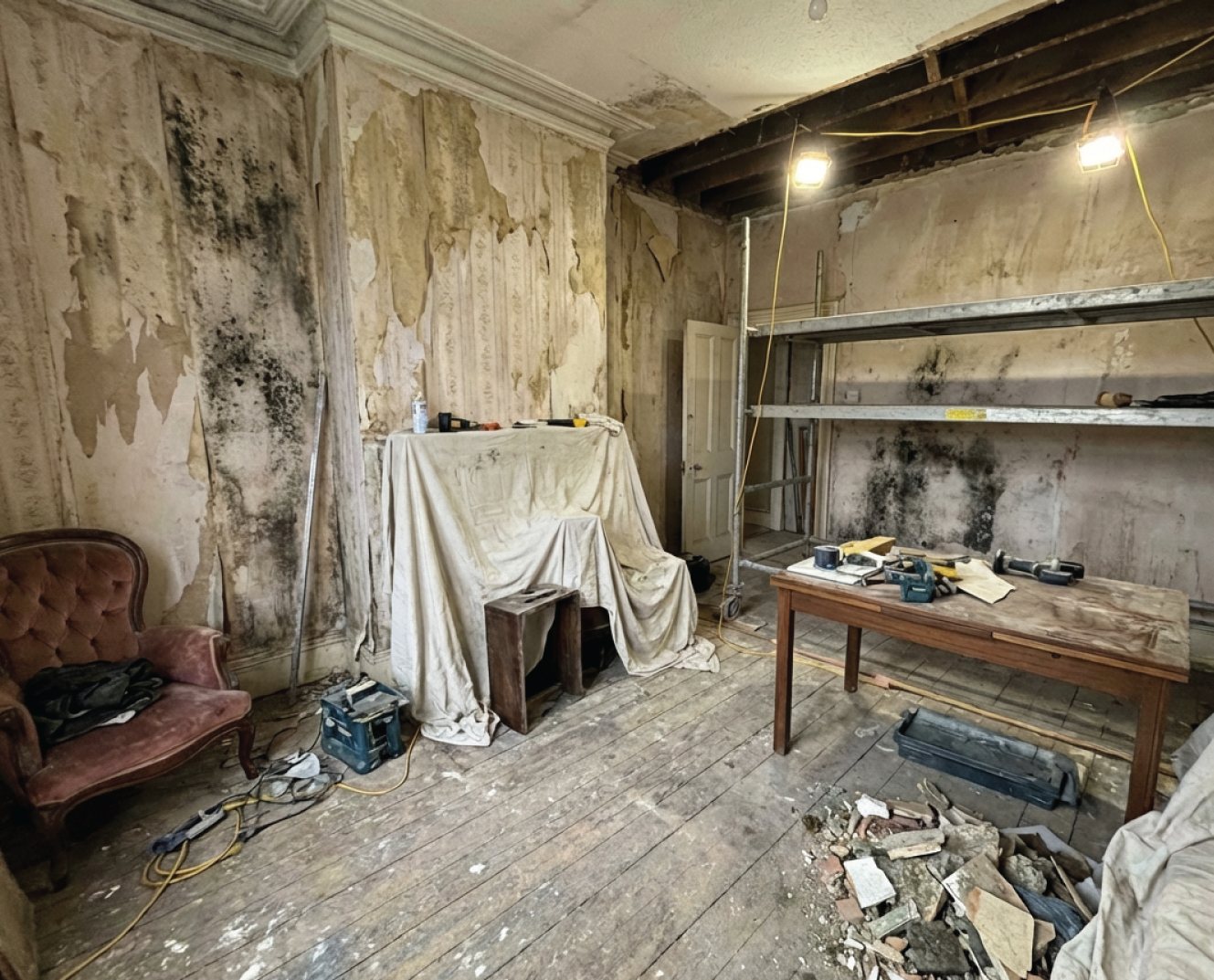
Genuine rising damp has a recognisable signature. Moisture is concentrated in the lowest metre of the wall and reduces with height, there is usually a defined tide mark, and salts are present. Skirtings and timber grounds fixed to the wet masonry decay.
- Damp confined to the lowest metre of a ground-floor wall
- A tide mark that darkens in winter and fades in summer
- Salt bloom or crystals pushing through paint and plaster
- Plaster that crumbles or sounds hollow when tapped
- Repeated decorative failure in the same horizontal band
The four things it usually turns out to be
A bridged damp-proof course is the most common. A raised patio, a rendered plinth carried down to the ground, or a cavity full of mortar droppings all allow moisture to travel past a perfectly functional DPC.
Penetrating damp is second. Water crossing the wall laterally through failed pointing, cracked render or a defective flashing produces patches rather than a band, and darkens within hours of heavy rain.
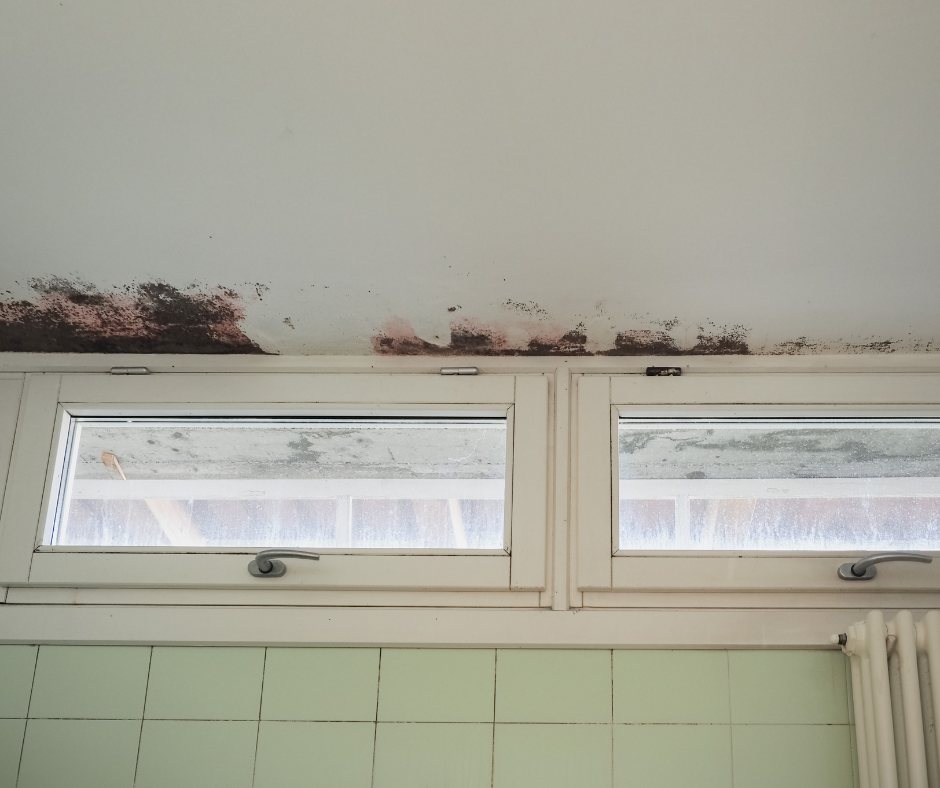
Condensation is third, and by volume it is the largest single cause of damp complaints in Britain. It is worst on cold surfaces, in corners and behind furniture, and shows as surface mould rather than salt.
Plumbing and drainage defects are fourth — a leaking gully beside a wall, a downpipe discharging behind render, a slow waste leak under a floor. They are cheap to fix once identified and expensive to misdiagnose.
How it should be diagnosed
A meter reading on its own proves nothing. Electrical resistance meters respond to salts and to conductive materials as readily as to water, which is why a surveyor should be taking readings at multiple heights, assessing the salt band, and inspecting outside as well as in.
If a survey produces a quotation for injection without anyone having looked at your ground levels, your rainwater goods and your ventilation, treat it with caution. Ask what the reading profile was and what was ruled out.
What correct treatment involves
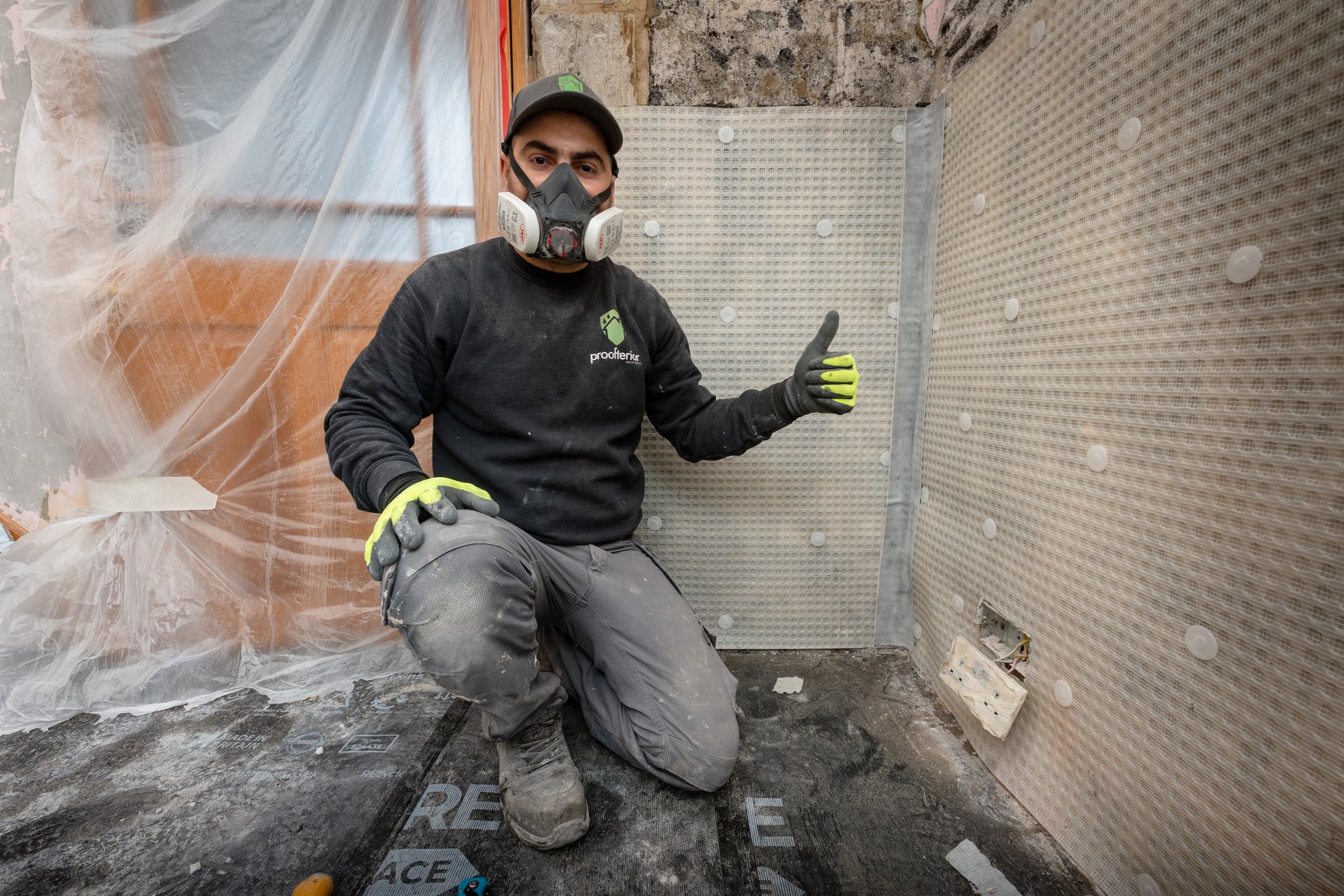
Where rising damp is confirmed, treatment is a sequence rather than a single product. The salt-contaminated plaster is removed beyond the visible damp. A new chemical damp-proof course is injected into the mortar bed at consistent height and depth. The wall is rebuilt with a salt-retardant render system so residual salts cannot reach the new decoration.
Expect the wall itself to take time to dry — roughly a month for every 25mm of thickness. A good replaster system means the room is usable and decoratable long before the masonry behind it is fully dry.