
Basement and Cellar Waterproofing
Below ground, water is under pressure. The design has to account for that.
Covering Dorset · Hampshire · Wiltshire
Book a survey for this issue
1/3Takes under a minute. A qualified surveyor attends — never a salesperson.
No obligation, no sales visit. Your details are used only to arrange the survey.
A cellar is the one part of a house where water arrives with hydrostatic pressure behind it. That rules out anything that simply coats the surface and hopes. Waterproofing below ground is designed to BS 8102 and depends on what the space will be used for — dry storage tolerates far more than a habitable room.
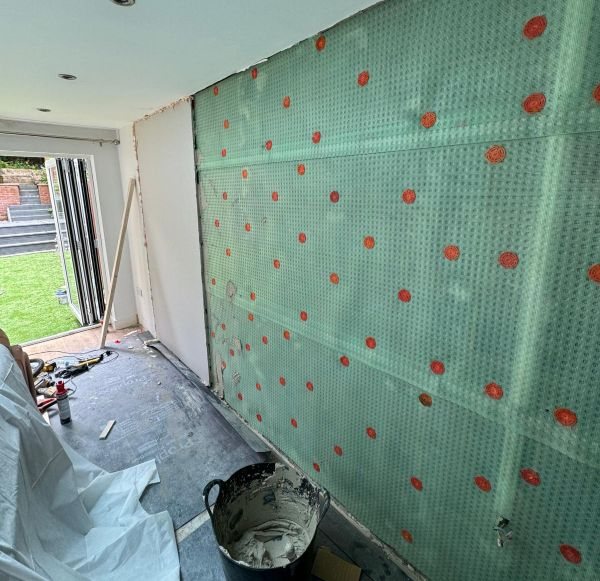
We use two main approaches: cementitious tanking, which resists water where the structure is sound, and cavity drain membranes, which accept water, channel it to a perimeter drain and pump it away. Most conversions in this region get the second.
From first reading to registered guarantee
The same five stages on every job, whether it is one wall or a whole property.
- 01
Establish water behaviour
Where water enters, how much, and whether the groundwater level fluctuates seasonally.
- 02
Agree the grade of use
Storage, utility or habitable — this sets the design standard under BS 8102.
- 03
Prepare the structure
Loose render removed, defective mortar repaired, fillets formed at junctions.
- 04
Install the system
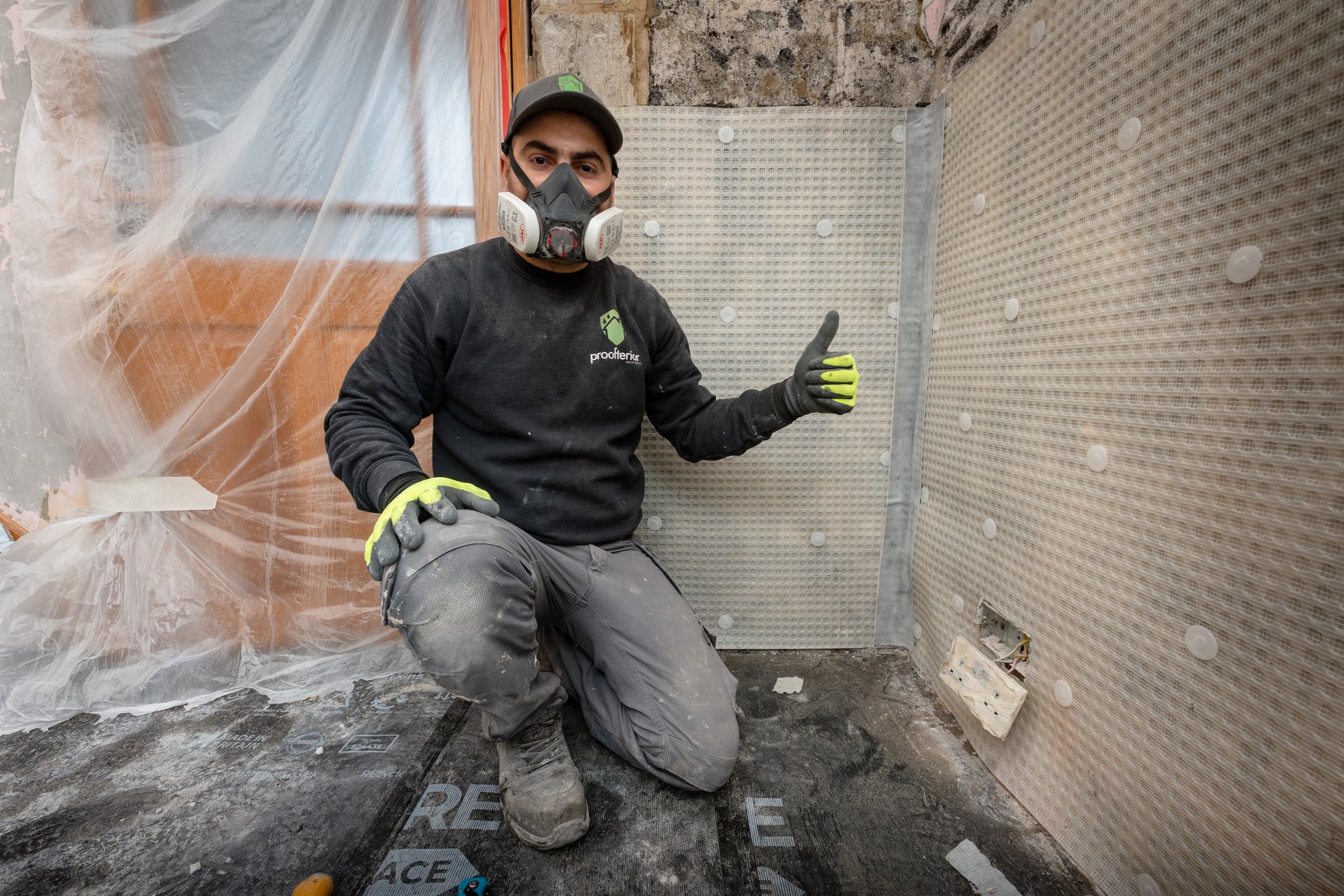
Tanking slurry or studded cavity drain membrane, sealed and fixed to a designed detail.
- 05
Drainage and pumping
Perimeter channel, sump chamber, twin pumps and battery backup where the space is habitable.
Everything this specification can cover
Your quotation lists only what your property needs. Anything not required is simply not on it.
- BS 8102 waterproofing design
- Cementitious tanking systems
- Cavity drain membrane installation
- Perimeter drainage channel
- Sump chamber, twin pump and alarm
- Insulated dry lining and finishing
Basement Waterproofing — answered
Tanking is simpler and cheaper but relies on a sound, stable structure and can be defeated by high pressure. Membranes work with the water instead of against it and are the safer choice for habitable conversions. We recommend based on the structure, not on preference.
If the system channels water rather than resisting it, yes — and for a habitable basement we specify twin pumps with a battery backup and alarm.
Yes, subject to means of escape, headroom and ventilation requirements. We will flag anything that needs building control involvement early.
Get a written diagnosis before anyone quotes for basement waterproofing
A qualified surveyor attends, tests properly and writes it down. No obligation, no sales visit, no charge.
Dorset · Hampshire · Wiltshire