
Timber Treatment — Rot, Woodworm and Structural Repair
Where damp has already reached the structure.
Covering Dorset · Hampshire · Wiltshire
Book a survey for this issue
1/3Takes under a minute. A qualified surveyor attends — never a salesperson.
No obligation, no sales visit. Your details are used only to arrange the survey.
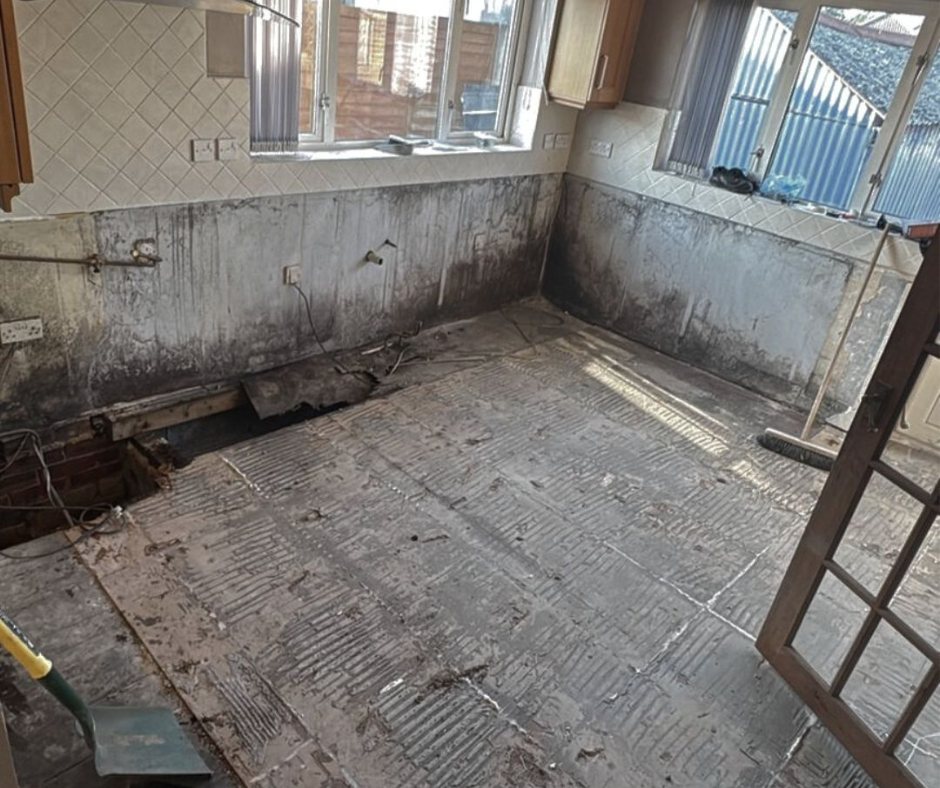
Damp that has been present long enough stops being a decorating problem and becomes a structural one. Joist ends bearing into wet walls, bressummers over bay windows, cellar head timbers and suspended ground floors are the places we find serious decay most often.
We open up, identify the organism, establish how far it has travelled and repair the structure — then eliminate the moisture that allowed it. Treatment without that last step is money wasted.
Within this service
- WoodwormMost exit holes are historic. The question is whether anything is still flying.
- Dry RotThe only timber fungus that can spread through masonry to find new wood.
- Wet RotConfined to where the water is, and far more common than dry rot.
- Subfloor RepairsThe void under a suspended floor is where damp problems hide longest.
From first reading to registered guarantee
The same five stages on every job, whether it is one wall or a whole property.
- 01
Open up and inspect
Floors lifted, hatches opened and timbers probed to find the true extent — decay is always wider than it looks.
- 02
Identify the organism
Dry rot, wet rot or insect attack each have different spread behaviour and a different specification.
- 03
Cut back and repair
Affected timber removed beyond the decay front, replaced in treated structural grade timber.
- 04
Treat and isolate
Fungicidal or insecticidal treatment plus DPC membranes to isolate new timber from masonry.
- 05
Remove the moisture
Ventilation restored, airbricks reopened, the damp mechanism corrected so decay cannot resume.
Everything this specification can cover
Your quotation lists only what your property needs. Anything not required is simply not on it.
- Structural timber inspection and probing
- Joist end, bearer and plate replacement
- Fungicidal and insecticidal treatments
- Sub-floor ventilation and airbrick reinstatement
- Concrete and steel structural support where required
- Floor relaying and reinstatement
Timber Treatment — answered
More urgent than wet rot. Dry rot can travel through masonry and behind plaster to find new timber, so a small visible outbreak may already have colonised joists in the next room. It should be investigated promptly.
No. We lift enough boards to establish extent and reach the affected members, and we relay them. Full relaying is only specified where the decking itself has gone.
Not always. Where the moisture source is removed and the decay is wet rot, replacement plus drying may be sufficient. Dry rot and active woodworm normally do require treatment.
Get a written diagnosis before anyone quotes for timber treatment
A qualified surveyor attends, tests properly and writes it down. No obligation, no sales visit, no charge.
Dorset · Hampshire · Wiltshire