
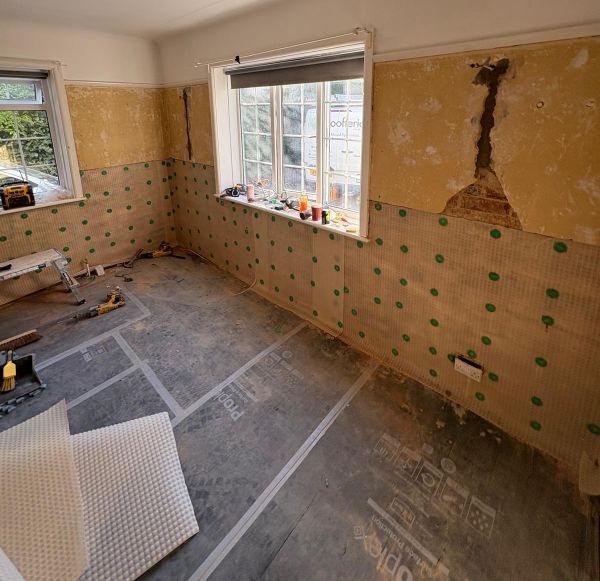
Internal Wall Insulation for Solid Walls
The realistic option where there is no cavity to fill.
Covering Dorset · Hampshire · Wiltshire
Book a survey for this issue
1/3Takes under a minute. A qualified surveyor attends — never a salesperson.
No obligation, no sales visit. Your details are used only to arrange the survey.
Solid brick and stone walls — most pre-1930s housing in this region — cannot be cavity filled. Internal insulated boarding raises the surface temperature of the coldest walls, which usually removes the mould problem entirely.
It has to be designed rather than just fitted. Vapour control, junction detailing at floors and reveals, and behaviour of the existing wall to moisture all matter. Get any of them wrong and you move the condensation inside the build-up where you cannot see it.
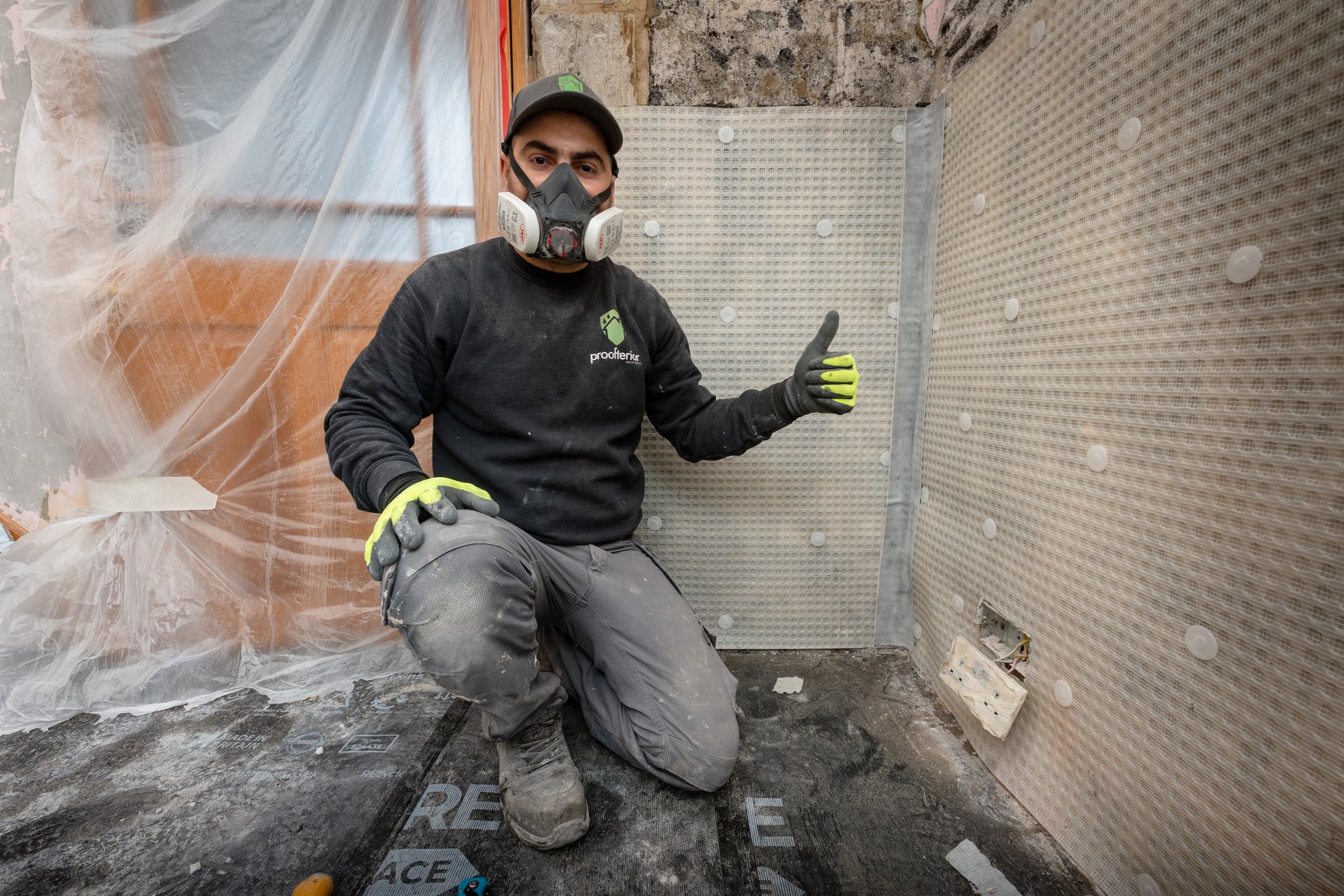
From first reading to registered guarantee
The same five stages on every job, whether it is one wall or a whole property.
- 01
Assess the wall
Construction, moisture content and existing damp mechanisms checked — insulation over a wet wall is never appropriate.
- 02
Design the build-up
Board type, thickness, vapour control layer and fixing method chosen with condensation risk in mind.
- 03
Detail the junctions
Reveals, lintels, floor and ceiling junctions insulated so no cold bridge is left to condense on.
- 04
Install
Boards fixed and sealed, services rerouted, skirtings and architraves reinstated.
- 05
Ventilate and verify
Extract capacity checked and post-works surface temperatures confirmed above dew point.
Everything this specification can cover
Your quotation lists only what your property needs. Anything not required is simply not on it.
- Wall moisture assessment before insulating
- Insulated plasterboard and laminate systems
- Vapour control layer detailing
- Reveal, lintel and junction insulation
- Service rerouting and reinstatement
- Ventilation upgrade alongside
Internal Wall Insulation — answered
Only if it is specified without condensation risk analysis or applied over a wall that is already wet. Any active damp mechanism is corrected first.
No. Usually only the coldest external walls need it, which keeps cost and room loss down.
They are removed and refitted onto the new surface. Deep boxes and extended pipework are part of the works.
Get a written diagnosis before anyone quotes for internal wall insulation
A qualified surveyor attends, tests properly and writes it down. No obligation, no sales visit, no charge.
Dorset · Hampshire · Wiltshire