
Penetrating Damp — Finding Where the Water Gets In
Water crossing the building fabric sideways, usually driven by wind and rain.
Covering Dorset · Hampshire · Wiltshire
Book a survey for this issue
1/3Takes under a minute. A qualified surveyor attends — never a salesperson.
No obligation, no sales visit. Your details are used only to arrange the survey.
Penetrating damp shows up as isolated patches rather than a band along the floor — often high on a wall, around a window reveal, beside a chimney breast or on the elevation that takes the prevailing south-westerly. On the coast, wind-driven rain does the damage that inland properties never see.
Fixing it means finding the entry point, not sealing the symptom. We inspect the elevation, the rainwater goods, the flashings and the mortar joints, and we specify repairs to the fabric before any internal reinstatement.
From first reading to registered guarantee
The same five stages on every job, whether it is one wall or a whole property.
- 01
External inspection
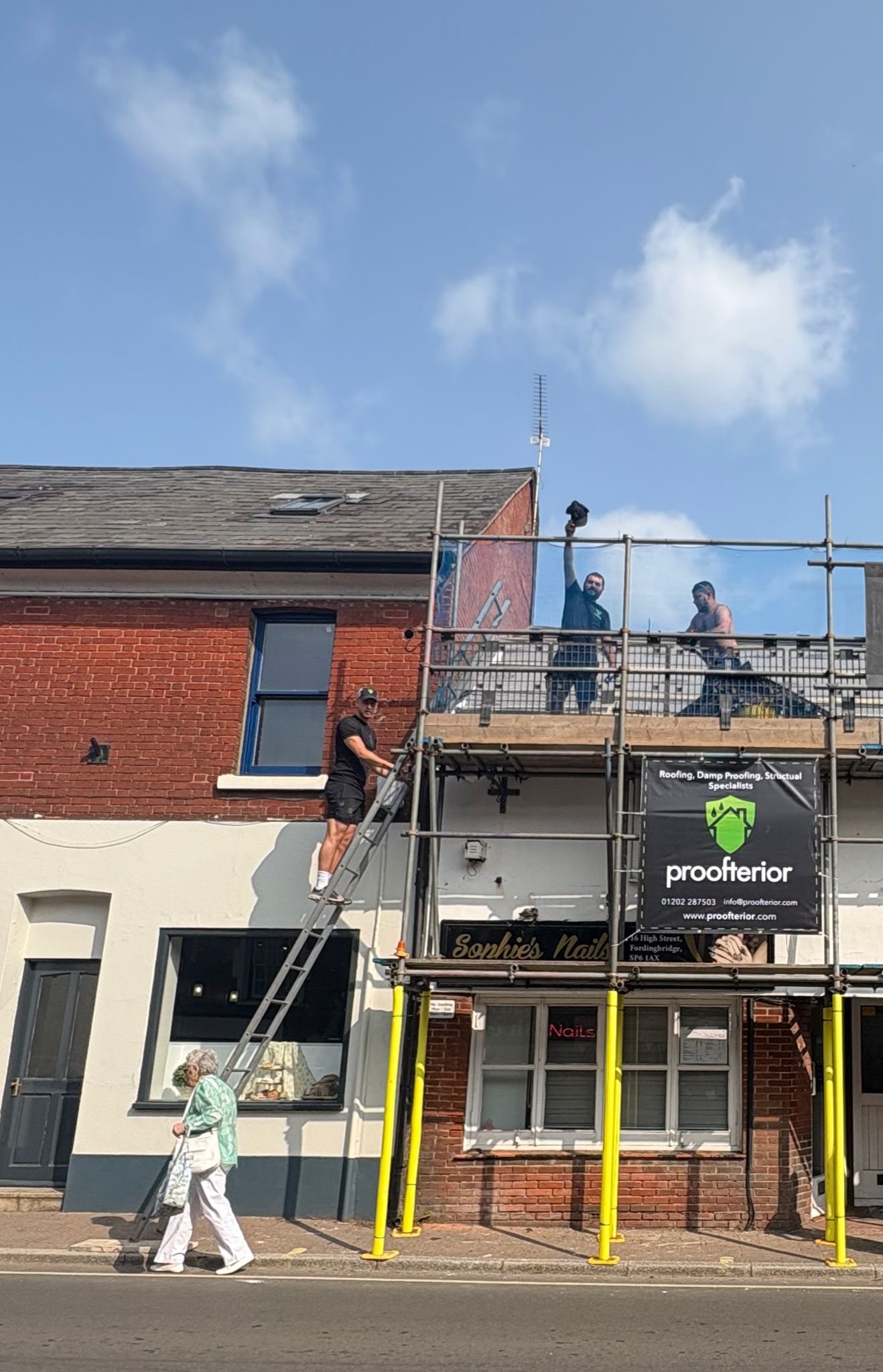
Elevation, pointing, render, sills, flashings, gutters and downpipes examined — at height where access allows.
- 02
Trace the path
Internal readings mapped against external defects to establish where water enters and how it travels.
- 03
Repair the fabric
Repointing, render repair, flashing renewal, sill and gully work — the actual cause is removed first.
- 04
Protect the elevation
Where exposure is severe, a breathable masonry protection cream sheds water without trapping vapour.
- 05
Internal reinstatement
Affected plaster removed and rebuilt once the wall is drying and the source is proven closed.
Everything this specification can cover
Your quotation lists only what your property needs. Anything not required is simply not on it.
- Full external elevation survey
- Repointing in a lime or matched cement mortar
- Render crack repair and patch renewal
- Lead flashing, cavity tray and abutment repairs
- Rainwater goods clearing, realignment or renewal
- Breathable masonry water-repellent treatment
Penetrating Damp — answered
Non-breathable coatings usually make things worse. They trap moisture already inside the masonry, and once the film cracks water gets behind it. We use vapour-permeable products only, and only after the defect is repaired.
Almost always exposure. The elevation facing the prevailing wind takes far more water than the others, so marginal pointing or hairline render cracks fail there first.
For anything above first-floor level or for full elevation work, yes. Small repairs are often reachable from a tower or ladder access. We tell you which before you commit.
Get a written diagnosis before anyone quotes for penetrating damp
A qualified surveyor attends, tests properly and writes it down. No obligation, no sales visit, no charge.
Dorset · Hampshire · Wiltshire