
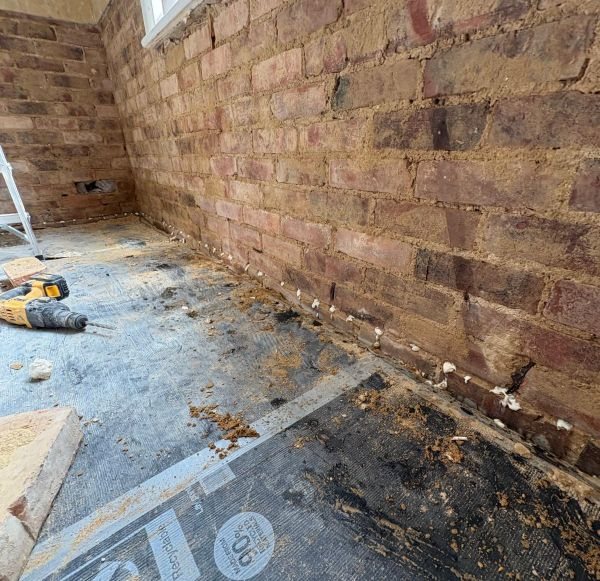
Rising Damp — Correctly Diagnosed, Properly Treated
Groundwater drawn up through masonry — and the salts it leaves behind.
Covering Dorset · Hampshire · Wiltshire
Book a survey for this issue
1/3Takes under a minute. A qualified surveyor attends — never a salesperson.
No obligation, no sales visit. Your details are used only to arrange the survey.
True rising damp is capillary movement of groundwater up through porous masonry where the original damp-proof course has failed, been bridged or was never installed. It carries dissolved nitrate and chloride salts, which is why the plaster keeps failing long after the wall itself has dried.
It is also the most over-diagnosed defect in British housing. Before we quote injection we confirm the mechanism: readings at increasing heights, an assessment of the salt band, and an external check for the far more common causes of a wet ground-floor wall.
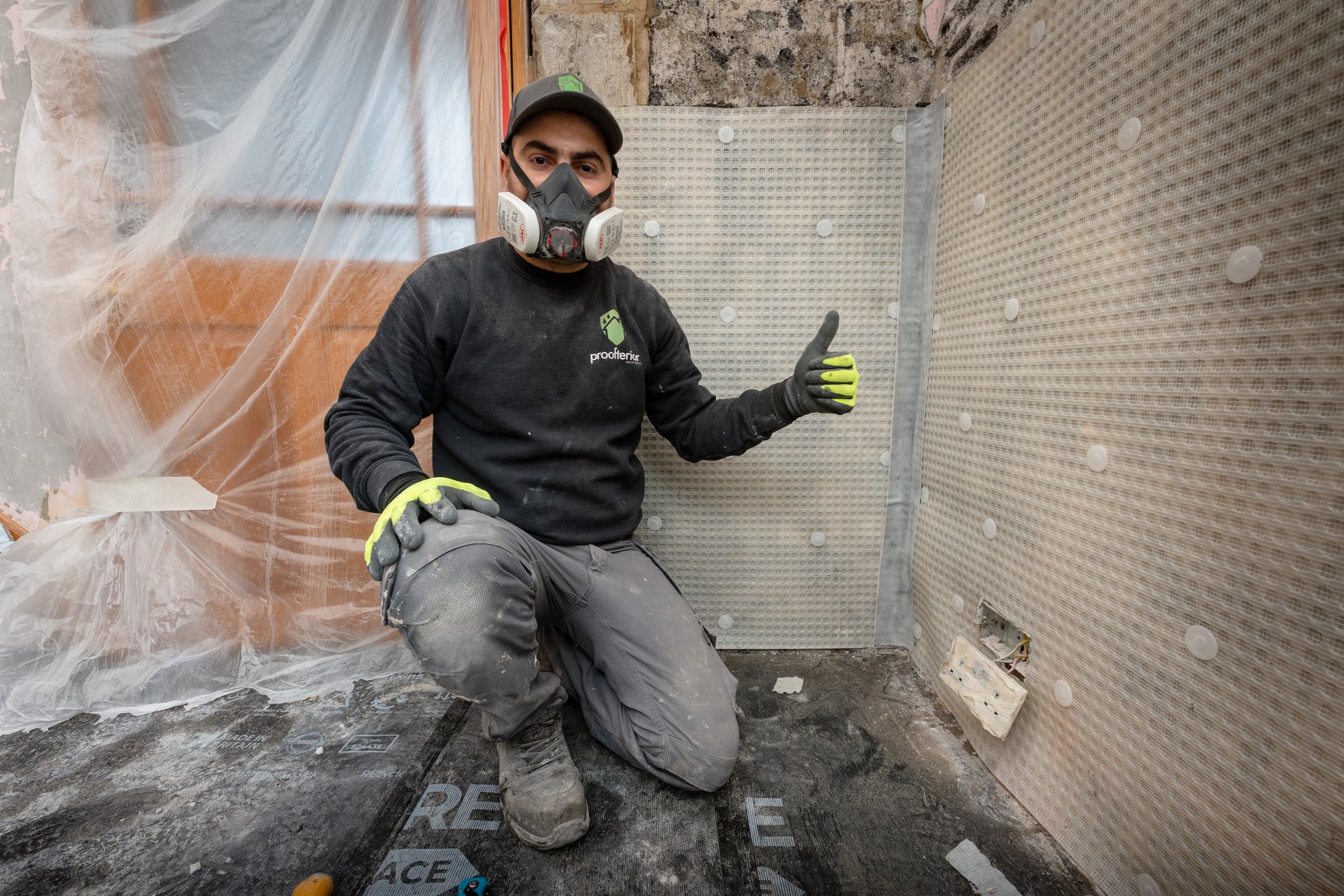
From first reading to registered guarantee
The same five stages on every job, whether it is one wall or a whole property.
- 01
Confirm the mechanism
Meter and salt profiling at height intervals to separate rising moisture from lateral ingress or condensation.
- 02
Remove the salt band
Contaminated plaster is hacked back beyond the visible damp — typically 300mm above the highest reading.
- 03
Install the new DPC
Silane/siloxane cream injected into the mortar bed at a consistent height and depth, recorded photographically.
- 04
Salt-retardant replaster
A render system designed to hold residual salts back from the new decorative finish.
- 05
Reinstate and guarantee
Skirtings, sockets and finishes returned, with a 25-year guarantee on the works.
Everything this specification can cover
Your quotation lists only what your property needs. Anything not required is simply not on it.
- Calibrated moisture and salt survey
- Chemical DPC injection to BS 6576
- Removal and disposal of contaminated plaster
- Salt-retardant render and breathable skim
- Timber and skirting replacement where decayed
- Bridging and external ground-level correction
Rising Damp Treatment — answered
Rising damp is worst at the base of the wall and shows salt contamination. Condensation is worst on cold surfaces, in corners and behind furniture, and tends to appear as surface mould rather than a salt band. The two frequently occur together.
No. Masonry releases construction and residual moisture slowly — roughly a month per 25mm of wall thickness. The replaster system is designed so the room is usable and decoratable long before the wall is fully dry.
They come off to reach the base of the wall. Original mouldings are eased off carefully and refitted where sound; decayed timber is replaced in matching profile.
Get a written diagnosis before anyone quotes for rising damp treatment
A qualified surveyor attends, tests properly and writes it down. No obligation, no sales visit, no charge.
Dorset · Hampshire · Wiltshire